What Are Sugar Coated Jelly Cubes? The Complete Guide for Buyers & Distributors
Sugar coated jelly cubes are bite-sized fruit-flavored confections with a soft, chewy center and a crunchy sugar coating. This guide covers everything - from ingredients and manufacturing process to shelf life, bulk packaging, and how distributors can source them in India.
Sugar coated jelly cubes are one of India's most popular confectionery products. Walk into any kirana store, sweet shop, or bakery supply counter across the country and you will find these colorful, chewy treats. But what exactly goes into making them? How are they manufactured at scale? And what should bulk buyers and distributors know before placing their first order?
This guide answers every question about sugar coated jelly cubes — from ingredients and production process to quality standards, packaging options, and sourcing from a trusted manufacturer like Fruitlly by Tulsi Foods.
What Are Sugar Coated Jelly Cubes?
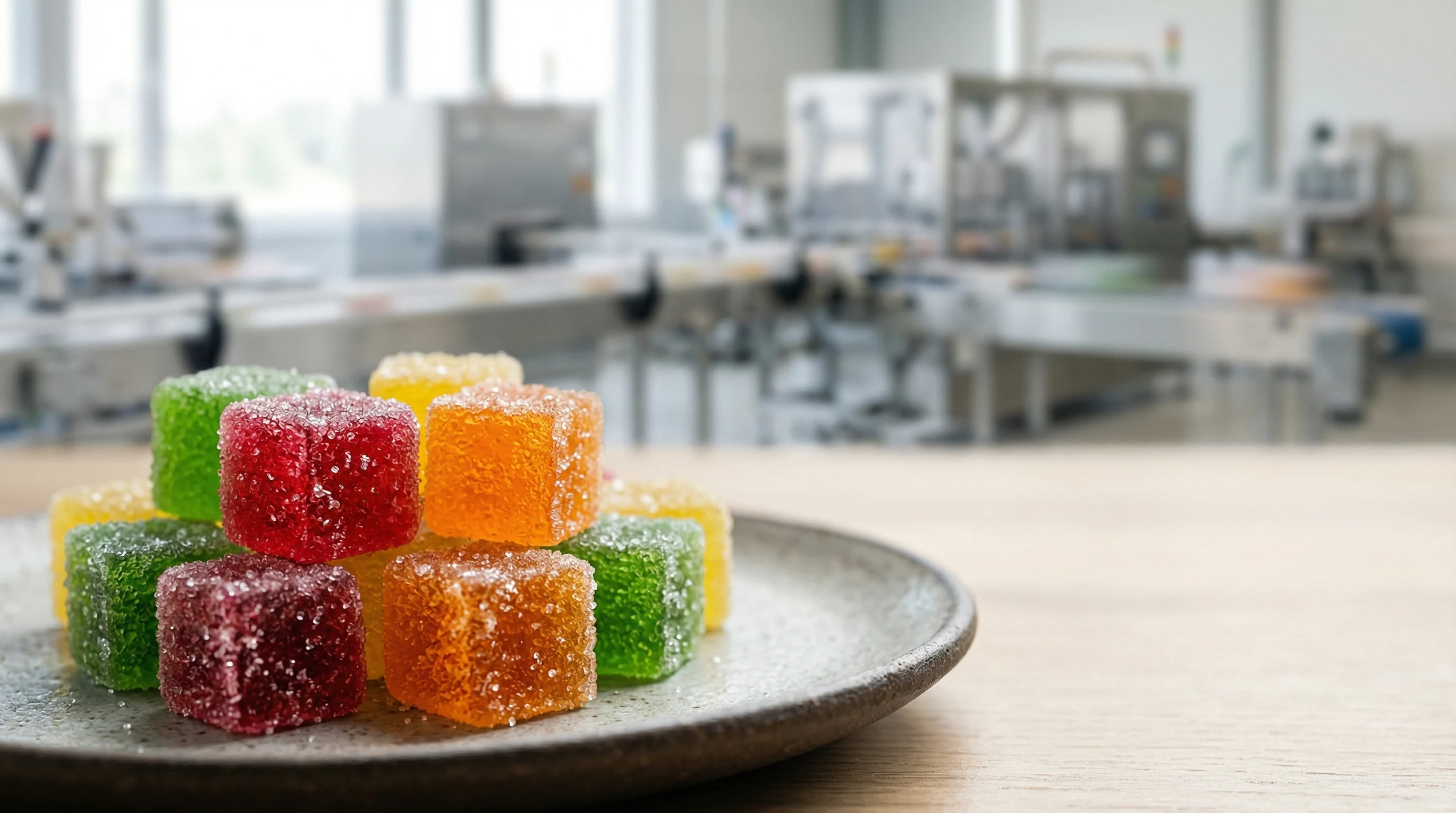
Sugar coated jelly cubes are small, cube-shaped confectionery items made from fruit-flavored jelly and coated in a thin layer of granulated sugar. They combine two satisfying textures: a soft, chewy jelly center and a slightly crunchy sugar exterior.
Unlike gummy candies (which typically use gelatin from animal sources), most Indian-manufactured sugar coated jelly cubes use pectin as the gelling agent. Pectin is derived from fruit peels — primarily apple and citrus — making these cubes suitable for vegetarian consumers. This is an important distinction for the Indian market, where a large portion of consumers prefer vegetarian food products.
Key Ingredients in Sugar Coated Jelly Cubes
The core ingredients used in commercial sugar coated jelly cubes include:
Sugar — The primary sweetener and also the coating material.
Liquid Glucose — Provides chewiness and prevents crystallization during storage.
Fruit Pectin (E-440) — A plant-based gelling agent derived from fruit peels. Responsible for the jelly texture.
Citric Acid (E-330) — Adds tartness and acts as a natural preservative.
Fruit Pulp or Fruit Flavoring — Provides taste. Common flavors include mango, strawberry, litchi, orange, guava, pineapple, and mix fruit.
Permitted Food Colors — Used to match the color with the flavor (yellow for mango, red for strawberry, etc.).
Water — Used during the cooking process.
The exact proportions vary by manufacturer, but the hallmark of a quality product is the balance between sweetness, chewiness, and fruit flavor intensity.
How Are Sugar Coated Jelly Cubes Manufactured?
The manufacturing process for sugar coated jelly cubes involves several precision steps:
Step 1: Syrup Preparation. Sugar and liquid glucose are dissolved in water and heated to a specific temperature. This creates the base syrup that forms the jelly body.
Step 2: Pectin Addition. Fruit pectin is hydrated separately and added to the hot syrup. The pectin concentration determines the final firmness of the jelly — too little and the cubes collapse, too much and they become rubbery.
Step 3: Flavoring and Coloring. Once the pectin is fully incorporated, fruit flavoring (natural or nature-identical) and food-grade coloring are added. Some premium manufacturers like Fruitlly use actual fruit pulp for enhanced flavor.
Step 4: Molding. The hot jelly mixture is poured into cube-shaped molds or deposited onto starch trays using automated depositing machines. At Tulsi Foods, automated production lines ensure uniform cube size and weight consistency across every batch.
Step 5: Cooling and Setting. The molds are cooled gradually, allowing the pectin to gel. This typically takes 8 to 12 hours under controlled temperature and humidity conditions.
Step 6: Sugar Coating. Once the cubes are firm, they are demolded and tumbled in granulated sugar. The coating serves multiple purposes: it prevents the cubes from sticking together, adds texture contrast, and extends shelf life by creating a moisture barrier.
Step 7: Drying and Packaging. The coated cubes are dried to the correct moisture content and then packed in airtight pouches, jars, or bulk cartons depending on the order type.
Shelf Life and Storage
When manufactured with proper quality control and packaging, sugar coated jelly cubes typically have a shelf life of 9 to 12 months. Fruitlly products from Tulsi Foods carry a 12-month shelf life.
For optimal quality, jelly cubes should be stored in a cool, dry place away from direct sunlight. Exposure to humidity can cause the sugar coating to dissolve, resulting in sticky surfaces. Exposure to heat can soften the jelly beyond acceptable texture parameters.
Distributors and retailers should ensure proper storage conditions in their warehouses and display areas to maintain product quality throughout the shelf life period.
Available Flavors
The Indian market offers sugar coated jelly cubes in a wide variety of fruit flavors. The most popular options include:
Mango — The best-selling flavor across India
Strawberry — Popular in urban markets
Mix Fruit — A multi-flavor assortment, ideal for retail variety packs
Litchi — Light and refreshing, popular in eastern India
Orange — Classic citrus flavor
Guava — Strong regional demand in Maharashtra and Gujarat
Imli (Tamarind) — A distinctly Indian flavor, popular as a tangy-sweet treat
Pineapple — Growing demand in the bakery and dessert segment
Custom flavors can typically be developed for private label and bulk buyers. Fruitlly by Tulsi Foods offers flavor customization for qualified B2B partners.
Packaging Options for Bulk Buyers
Sugar coated jelly cubes are available in several packaging formats:
Pouch Packs — Small packs (50 to 85 pieces) for retail counter sales
Jar Packs — 500g and 1kg plastic jars for sweet shops and bakeries
Bulk Cartons — 5kg cartons for wholesale and distribution
Custom Private Label — Your brand, your packaging, manufactured by Tulsi Foods
For B2B buyers, the packaging format affects logistics cost, retail shelf appeal, and per-unit economics. Most distributors start with the 5kg bulk carton format and upgrade to branded packaging as their volume grows.
Sugar Coated Jelly Cubes vs Gummy Candy: Key Differences
Buyers often confuse jelly cubes with gummy candies. While they look similar, there are significant differences:
Gelling Agent: Jelly cubes use pectin (plant-based, vegetarian). Gummy candies typically use gelatin (animal-based, non-vegetarian).
Texture: Jelly cubes have a softer, more tender bite. Gummies are firmer and more elastic.
Sugar Coating: Jelly cubes always have an external sugar coating. Gummies are often uncoated or have a sour coating.
Market Position: In India, jelly cubes are positioned as an affordable confectionery for all age groups. Gummies tend to target a premium, health-conscious segment.
Vegetarian Status: Pectin-based jelly cubes are vegetarian by default. This is a major selling point in India.
Why B2B Buyers Choose Fruitlly by Tulsi Foods
Fruitlly is the consumer brand of Tulsi Foods, a confectionery manufacturer based in MIDC, Jalgaon, Maharashtra. With over 30 years of manufacturing experience (established 1995), Tulsi Foods brings several advantages for B2B buyers:
Production Capacity: 50,000+ units daily from an automated, ISO-compliant facility.
Consistent Quality: Every batch is tested for texture, flavor, color, and moisture content.
Flexible MOQ: Multiple minimum order quantity options to suit distributors of all sizes.
Private Label Support: Custom branding, packaging design, and flavor development available.
Pan-India Distribution: Established supply chain covering major markets across India.
Export Capability: Products meet export-grade standards for international markets.
Whether you are a regional distributor, a retail chain buyer, or a private label brand looking for a manufacturing partner, Fruitlly by Tulsi Foods provides the product quality and supply reliability your business needs.
Ready to Source Sugar Coated Jelly Cubes?
Contact our B2B sales team for bulk pricing, product samples, and distribution partnership details. We respond to all inquiries within 24 hours.
Phone: +91 94222 83890 Email: info@fruitlly.com Website: https://fruitlly.com/contact